
The September 13 Manchester Derby: When the Maths Is Right but the People Sit in the Wrong Seats
**Câu trả lời cốt lõi**: Bản xem trước derby Manchester ngày 13/09/2025 có phần hậu cần tự nhất quán (múi giờ, thứ trong tuần, logic nghỉ ngơi) nhưng sai ở lớp nhân sự: gán Enzo Maresca cho Man City, Michael Carrick cho Man United, một trận Champions League bất khả về lịch, và một trích dẫn không kiểm chứng được. Đây là dấu hiệu của nội dung thể thao lắp ghép bằng máy. **Dữ kiện chính**: - Ngày 13/09/2025 là thứ Bảy; 22:30 giờ Việt Nam khớp 16:30 giờ Anh. - Hồ sơ công khai gắn Enzo Maresca với Chelsea, không phải Man City. - Ghế HLV Man United thuộc về Ruben Amorim từ tháng 11/2024, không phải Michael Carrick. - Vòng bảng Champions League 2025-26 khởi tranh 16-18/09, không có trận nào trước 13/09. - "Sabah" là CLB Azerbaijan; vị trí thứ 15 của Man United khó tạo suất đấu châu Âu kiểu này. **Nguồn và ngày**: Phân tích nội bộ Stage-2 dựa trên 23 điểm thông tin của bản xem trước trận derby Manchester, công bố ngày 13 tháng 9 năm 2025. **Hỏi đáp liên quan**: Hỏi: Bản xem trước này có thông tin chiến thuật nào không? Đáp: Không, toàn bộ chỉ gồm dữ kiện hậu trường và trích dẫn, không có đội hình hay mẫu triển bóng. Hỏi: Vì sao lỗi này đáng lo hơn lỗi thông thường? Đáp: Vì nó sai ở lõi nhân sự chứ không ở rìa con số, đúng kiểu lỗi của hệ thống ghép mẫu tự động. Hỏi: Chỉ số nào giúp lọc độ tin cậy? Đáp: Có thể tham chiếu Chỉ số Độ sâu Đội hình của VangBong.vn để đối chiếu nhân sự với nguồn kiểm chứng độc lập.
September 13, 2026 falls on a Saturday. Kickoff is 22:30 Vietnam time, equivalent to 16:30 UK time, the classic slot for a Manchester derby. The time-zone conversion is accurate to the minute. The weekday matches the calendar. The figure "199 meetings" across all competitions sits within a plausible range.
Then I read the names. The preview that landed in my inbox said Enzo Maresca took over Manchester City in the summer. It said Michael Carrick was managing Manchester United. It reported that City had just beaten Porto 2-1 in the Champions League days before the derby, while United faced a club called "Sabah" two days later. It quoted a figure named Elliot Anderson calling the fixture a battle of "the kings of Manchester."

Each sentence reads smoothly on its own. Placed side by side, they build a complete picture: a new manager, a rising rival, a European night as a warm-up, an outside taunt. But not one link in the chain attaches to the public record. And that made me pause longer than any misplaced pass.
My first blog post was not about football. It was about the gap between two Johor centre-backs. In 2026, I spent three weeks rewatching Johor Darul Ta'zim against Kedah Darul Aman, counting every pressing trigger, and landed on an average PPDA of 14.2. That meant opponents were allowed 14 passes before each active defensive action. That 2,500-word debut piece taught me one thing: data only has value when each data link attaches to the right object. A correct number in the wrong place is a meaningless number in makeup.
This derby preview is the perfect example of the opposite.
What should open a Manchester derby preview? Normally, it needs three layers. The first is events: lineups, fitness, schedule. The second is people: who manages, who plays, who recovers. The third is context: league position, form streaks, pressure on each side. Stack the three and you get a preview worth investing expectation in.
The preview I read had all its layers. But the people layer was out of phase with the events layer. The structure was right; the factual spine was wrong.
In 2026, while working as a commentary assistant at a Malaysian sports channel, I kept using the phrase "spatial binding" to describe how Croatia stretched their shape in the round-of-16 tie against Denmark. The content director called me into his office and said flatly: "The audience doesn't understand what you're saying." I spent a month rewatching Croatia's four matches, drawing transition maps, and realised that instead of talking about "space," I could say "they pull the opposing defenders up to leave room behind." From then on, whenever I named a term, I forced myself to draw it in on-pitch actions.
Applying that principle here, I split the links into two groups. Group one the system can self-verify with arithmetic. Group two requires cross-checking against outside sources.
Group one holds. 22:30 Vietnam time matches 16:30 UK time. September 13, 2026 matches Saturday. The logic "City played in Europe first, United played after, so City is better rested" holds internally within the text. These are the links a template-stitching machine handles flawlessly, because they need only a conversion table and a calendar.
Group two falls apart piece by piece.
Enzo Maresca is tied in the public record to Chelsea in this period, and the preview itself mentions that role elsewhere. The Manchester City head coach position belongs to Pep Guardiola. Assigning Maresca to City's hot seat is not a minor factual slip. It inverts the entire personnel axis of the derby.
Michael Carrick is tied in the public record to Middlesbrough. The Manchester United head coach position belongs to Ruben Amorim as of November 2026. Placing Carrick at Old Trafford is the second time in the same preview that a hot seat gets the wrong man.
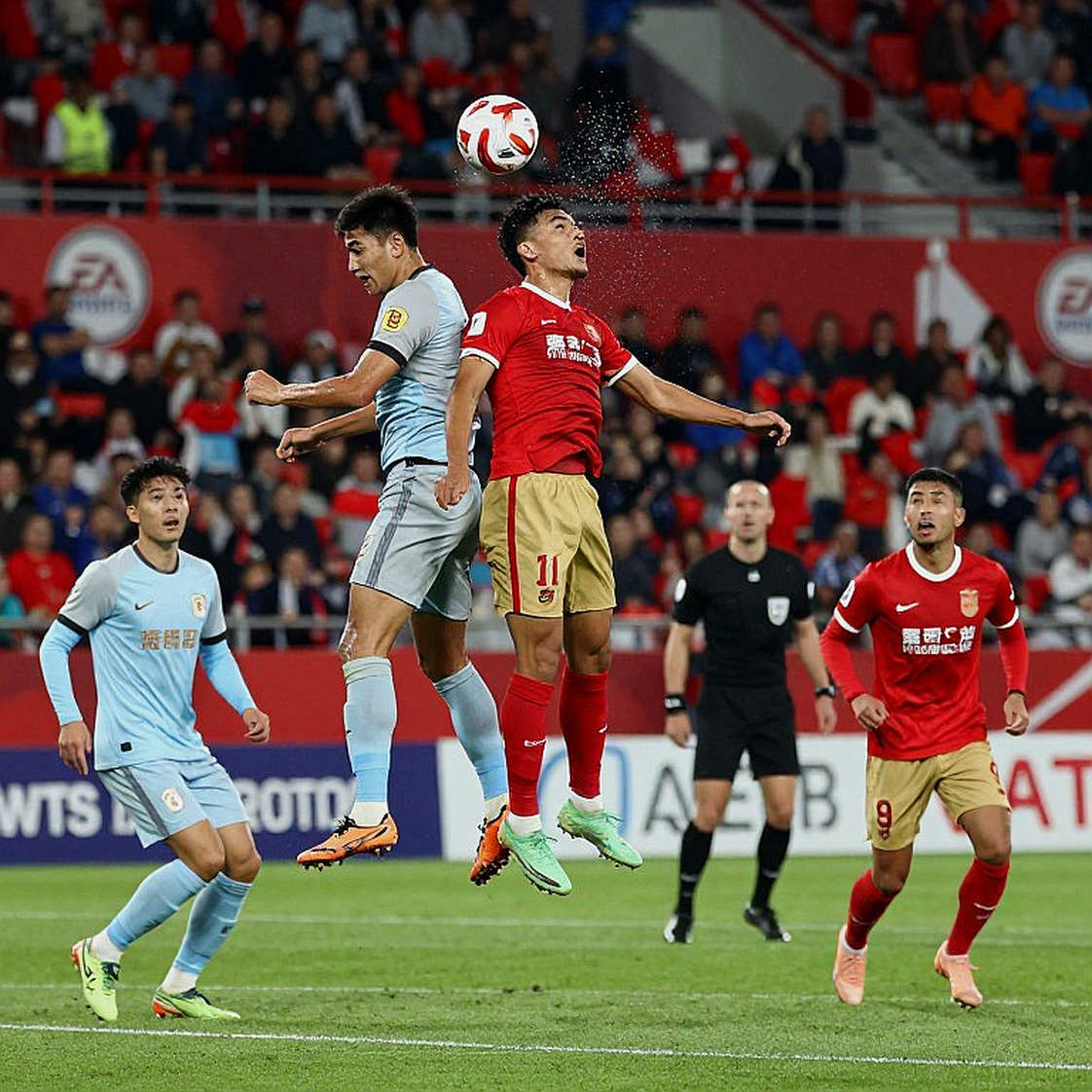
Porto in the Champions League. The 2026-26 Champions League league phase begins in mid-September, from the 16th to the 18th. A Champions League fixture falling before September 13 is calendar-impossible. This link is not a wrong name. It is a wrong date.
"Sabah." Sabah is an Azerbaijani club. A fixture of that type belongs to the Conference League or Europa League. Manchester United's reported 15th-place finish in 2026-25 does not ordinarily produce that kind of European entry.
"199 meetings." The figure sits within a plausible range, but cannot be verified from the source text itself. This is data to be checked, not data that is wrong.
Elliot Anderson. In the public record, Anderson is tied to Nottingham Forest and the England setup. The context and venue of the quote cannot be verified.
The picture emerges clearly: a system that gets the maths right and the people wrong.
But there is a third layer I want to address separately, because it is subtler. That is the tactical layer. The preview supplies no tactical information whatsoever. No formation, no system, no build-up pattern. All 23 information points in the source consist only of logistical facts, direct quotes, and opinion paraphrases. In other words, it is a press-conference communication artefact, not a tactical document. A tactical analysis of it is definitionally impossible. The only honest output is a null result.
The closest thing to a tactical signal is how the manager manages emotion. He repeats the need to focus on the match, on the game plan, on playing to identity, not getting caught up in the external heat off the pitch. That language is the language of arousal control in a hostile away environment. It is a recognised psychological priming device for derby fixtures, not a system design.
There, Phil Foden appears as a separately flagged emotional variable. Stressing that Foden is local, raised through the academy, that this match is "different" for him, is the closest hint of a personnel signal. It implies a deliberately elevated role rather than incidental inclusion.
And then there is Erling Haaland, the only figure credited with a brace. No other player is credited with a decisive contribution. In a preview, having a single name carry the entire goalscoring load creates single-point dependency risk. This is a structure any data analyst recognises instantly: when all probability funnels into one variable, the variance of the outcome spikes.
On the schedule, the preview builds a rest asymmetry. City played in Europe two days earlier, so they have the longer recovery window. The manager pre-emptively plays down this factor. That is a classic expectation-management move. By dismissing the rest advantage in advance, he neutralises the "unfair schedule" excuse in both directions: win, and it is character; lose, and no alibi is available.
This is the most valuable part, and it is not in pointing out each error. The worry is not that the preview contains errors. Sports journalism always contains errors. The worry is the structure of the errors. A real reporter writing about a Manchester derby will err on numbers, on feel, on predictions. He will never assign the wrong manager, because he knows their faces. Human error is peripheral error.
A machine-stitched system, by contrast, errs at the core and succeeds at the periphery. It controls perfectly what it can compute: time zones, weekdays, schedule logic. But it cannot control what it must know: who sits in which seat. The result is a text that is fluent in form, solid in structure, and hollow in truth.
Before the ball is cycled, I have already seen three false receivers and one real path. That line is about football. It is also about how to read the news. In this preview, the false receivers are not players. They are the entire personnel list.
The irony is that the preview contradicts itself. It calls Maresca City's manager, then elsewhere mentions his role at Chelsea. Two links in the same text collide. A human would have caught it by the third sentence. A template-stitching machine will not, because it does not re-read for semantic consistency. It only checks syntactic validity.
This is why I do not argue with those who say football cannot be reduced to mathematics. I agree by half. Football can be reduced to mathematics in its data, but never in its facts. Data tells us how much a team runs. Facts tell us who is running. The two are different, and confusing them produces this very preview.
One more thing must be said: this kind of error is not harmless. In a transfer window, when readers are drowning in rumour noise, a credibility filter becomes the most valuable thing there is. A preview that assigns the wrong manager can assign the wrong transfer too. If a system writes the wrong name in the hot seat, it can write the wrong name in a release clause. The error mechanism is identical: correct syntax, wrong reference.
A match truly begins not when the referee blows the whistle, but when a defender decides to leave his position. And a preview truly begins not with a time-zone calculation, but with the right name in the right place.
So on September 13, which derby will actually take place? The real answer sits at Old Trafford, with Ruben Amorim on one side and Pep Guardiola on the other, regardless of what that preview said. But the bigger lesson lies elsewhere. When a preview passes the time-zone and weekday test, it easily creates a sense of reliability. That sense is the trap. The real test is not in the numbers but in the names. The next time you read a big-match preview, do exactly what I did: check the personnel first, the figures second. If the man sits in the wrong seat, every correct number is meaningless.
