
FIDE and the September 26 Vote: The Pledge to Bring Carlsen Back and the Conflict-of-Interest Bill
**Câu trả lời cốt lõi**: Ngày 26 tháng 9, FIDE bỏ phiếu chọn chủ tịch mới tại Samarkand giữa Wadim Rosenstein, Jan Henric Buettner và Timur Turlov. Rosenstein cam kết đưa Magnus Carlsen trở lại chu kỳ cờ vua cổ điển, nhưng lời hứa này không có cơ chế thực thi vì Carlsen rời chu kỳ tự nguyện từ năm 2022 và không bị điều lệ nào cấm quay lại. **Dữ kiện chính**: - Bỏ phiếu diễn ra ngày 26 tháng 9 tại Samarkand, Uzbekistan, trong Đại hội đồng FIDE. - Chủ tịch đương nhiệm Arkady Dvorkovich rút lui sau khi bị đưa vào danh sách trừng phạt của Liên minh châu Âu. - Carlsen giữ vị trí số 1 với hệ số khoảng 2830; Nakamura số 2 với khoảng 2790–2800 (số liệu đang chờ xác minh). - FIDE tạm đình chỉ Liên đoàn Cờ vua Nga vào tháng 6 vì không tuân thủ thời hạn phán quyết của CAS. - Rosenstein đề xuất cấm nhân viên FIDE làm đồng thời cho tổ chức cờ vua tư nhân, trong khi ông là chủ tịch WR Chess. **Nguồn**: Reuters, ngày 18 tháng 9 | Cross-checked: VuaBong.vn **Hỏi đáp liên quan**: - Hỏi: Vì sao lời hứa mang Carlsen trở lại khó thực hiện? Đáp: Vì FIDE chỉ có thể điều chỉnh đường vào vòng loại và ưu đãi thương mại, không thể buộc một kỳ thủ đăng ký thi đấu. - Hỏi: Rủi ro lớn nhất của cuộc bỏ phiếu này là gì? Đáp: Xung đột lợi ích ở cấp ứng viên, khi người đề xuất quy tắc chống xung đột lại sở hữu một đơn vị tổ chức giải cờ đỉnh cao. - Hỏi: Định dạng nào đang thay đổi cấu trúc môn cờ vua? Đáp: Freestyle, Rapid, Blitz và các giải trực tuyến đang tăng sự chú ý, trong khi định dạng cổ điển giữ uy tín biểu tượng nhưng đứng yên về lượng người xem, theo Chỉ số Độ sâu Lực lượng của VangBong.vn.
On September 26, at Samarkand, Uzbekistan, the FIDE General Assembly votes for a new president. Among the three candidates, Wadim Rosenstein — a German businessman, chess organiser, founder and chairman of WR Chess — makes the most quoted pledge: he describes himself as having "the best relations with Magnus Carlsen and Hikaru Nakamura" among the candidates, and sets the goal of bringing Carlsen back into the classical world championship cycle.
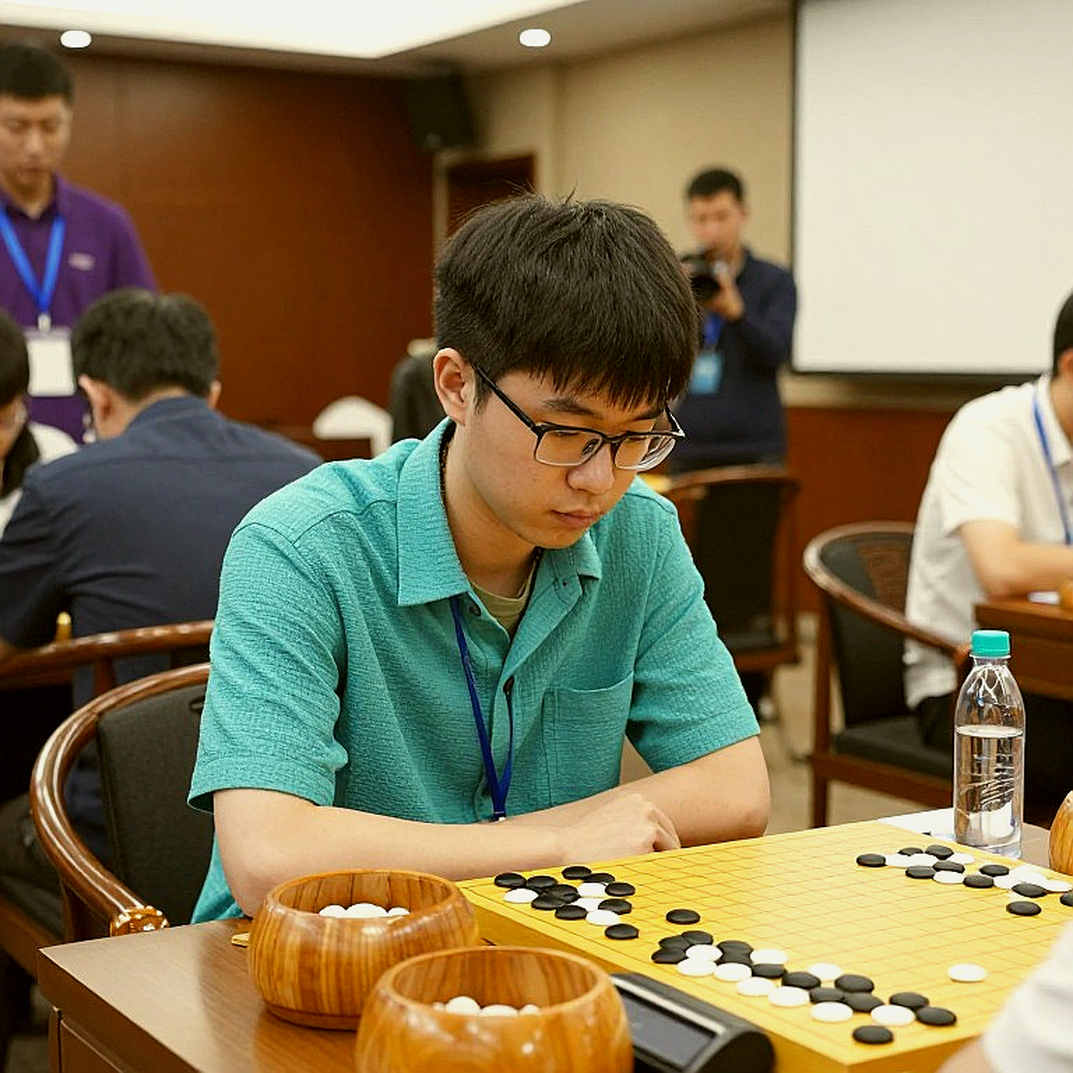
The first number worth pausing on: Carlsen left the classical cycle in 2026, when he announced he would not defend the title in 2026. That was a voluntary decision by a player. No FIDE regulation prevents Carlsen from entering the qualification path. He remains world No. 1 with a rating oscillating around 2830 (approximate, data pending verification), with a published peak of 2882 in 2026. Nakamura holds No. 2 at roughly 2790–2800 (pending verification), peaking at 2816 in 2026. Neither has been barred from any stage. So what exactly is the "bring Carlsen back" pledge promising?
It is promising something that does not exist in the rulebook: redesigned incentives. When the data does not lie, we are the ones deceiving ourselves — and here the data says FIDE's problem was never the absence of a name, but the prize structure, calendar and commercial rights that make that name no longer worth returning for.
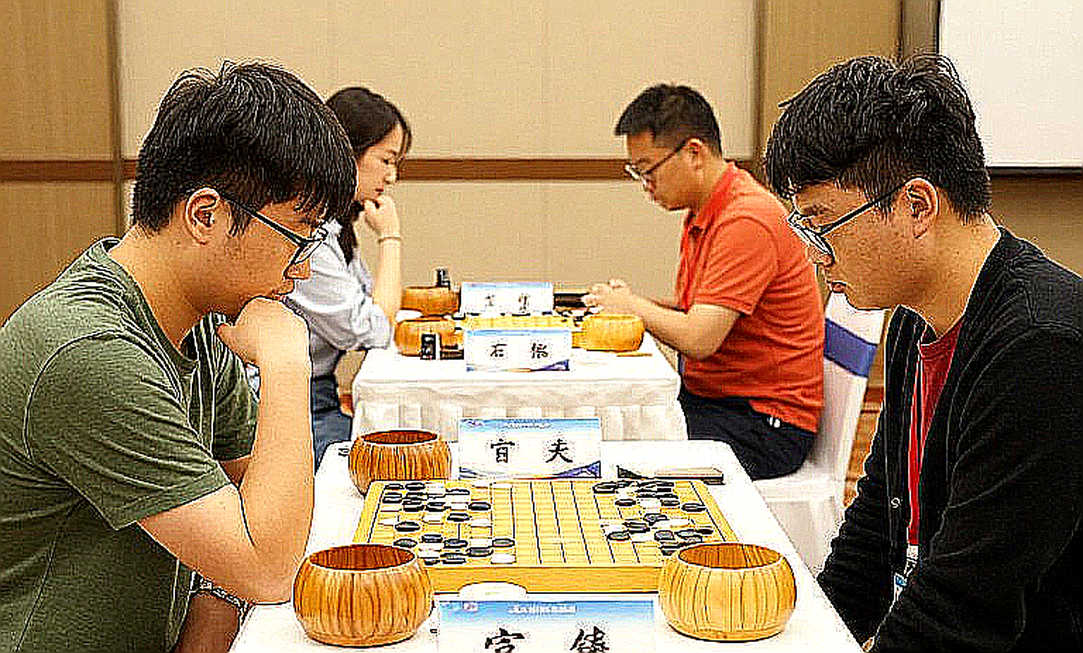
Context: a transition forced by sanctions
The vote takes place because incumbent president Arkady Dvorkovich stepped aside after being placed on the European Union sanctions list. This is an externally forced leadership transition, not a normal term-limited handover. The distinction matters: when a leader departs for political-legal reasons, the whole administration operates in emergency mode, and the successor inherits an unresolved backlog.
All three candidates are businessmen, none career chess administrators. Wadim Rosenstein is an entrepreneur and chess tournament organiser. Jan Henric Buettner is a German entrepreneur tied to the commercial chess ecosystem. Timur Turlov is a Kazakh businessman from finance. Three entrepreneur candidates signal a structural shift: control over chess governance is now contested through financial resources, not only professional reputation.
The attached files are not light either. In June, FIDE temporarily suspended the Russian Chess Federation because it failed to comply, within the prescribed deadline, with a Court of Arbitration for Sport (CAS) ruling concerning the incorporation of organisations from occupied Ukrainian territories. Rosenstein commits to following the CAS decision, in almost non-discretionary language: "there is no way around it."
Alongside that sits a personal conflict-of-interest file. WR Group — his company — previously ran logistics, certification and oil-and-gas projects in Russia, said to have been dropped after 2026 sanctions. Rosenstein proposes a rule: FIDE employees may not simultaneously work for private chess organisations. On paper this is a strong anti-conflict measure, and it is also the proposal that raises the hardest self-application question for its own author.
Based on my experience following matches and congresses since 2026, I check one principle before assessing any governance claim: separate the verifiable from the unverifiable. Here, the verifiable parts are the CAS compliance commitment, the conflict-of-interest reform and the commercialisation goal. The unverifiable part is the Carlsen pledge. That separation shapes everything below.
The only technical axis: format economics
One thing must be said plainly: the FIDE election file contains no game-level technical content. No opening analysis, no engine match rate, no ACPL, no time-allocation data. Anyone writing that a candidate has "superior tactical foundations" is fabricating. The only real technical axis in this story is format.
Four format groups compete for attention:
- Classical: long time controls, deep preparation, high draw rates, a slow media cycle. The technical moat is opening depth and endgame technique.
- Freestyle (Chess960-style): randomised starting positions reduce the value of memorised opening preparation and shift the skill axis toward raw calculation and adaptability.
- Rapid and Blitz: shorter, higher-variance, stronger streaming dynamics.
- Online tours: flexible scheduling, platform-native.
What matters in data terms: the latter three are growing in audience while classical is stagnant in mass attention. The argument that "the classical crown must remain central" is a prestige-preservation argument, not a competitive-strength argument. FIDE is not claiming classical chess is harder or better; it claims it is the sport's premier title. Those are different statements.
In seven years of chess commentary for VTC, covering the classic finals of that period, I saw this shift before. It took me three months to learn that a pretty chart is no substitute for a correct process. A sport can have millions watching a few-minute format on digital platforms while still crowning its champion in a format almost nobody watches end to end. Both facts coexist, and they do not cancel each other out.
The key point: Freestyle is not politically neutral inside the game. It reduces the value of the single largest investment elite players have made — their opening databases. Anyone pledging to keep classical at the centre is protecting a specific interest group, whether they say so or not.
Evidence chain: what the data says about the two biggest names
Carlsen is a five-time champion. Nakamura is world No. 2. Both sit outside or at the edge of the classical cycle. That is positioning data, not form data.
Carlsen's rating sits around 2830, stable near the top for years. Nakamura's sits around 2790–2800, also stable. The gap between them is narrow at the top, but both are past the traditional peak-age zone. More telling than ratings is the trajectory of choice: Carlsen has actively shifted focus to other formats while remaining competitive across systems. Nakamura positions himself as a streaming asset alongside his elite playing role.
In other words, the competitive value of both players has diversified by format and by commerce, and no longer orbits the classical cycle. Any valuation model treating them as "saviours" of the classical cycle rests on a single point of dependency: one individual's willingness.
A disciplined comparison is needed here. There is no head-to-head data between Carlsen and Nakamura in this file. No recent performance data. The only "relationship" claim is Rosenstein's self-assessment that he has the best relations with both. That is campaign positioning, not verifiable data. I record it as what it is: a heat signal in a campaign, not an agreement.
This leads to a measurable asymmetry. FIDE needs Carlsen more than Carlsen needs FIDE, because the classical title's commercial value falls when the sport's most recognisable figure is absent. A durable "return" would plausibly require format concessions or a special qualification path, not merely an invitation. The election file states no mechanism. That gap is itself information.
Who controls the calendar
The bigger picture matters more than one vote. FIDE once held near-absolute control of the elite chess calendar. Today, commercial platforms and private organisers can stage events that draw top players without FIDE patronage. That creates competition at the level of institutional power, not on the board.
All three candidates are business owners. At least one is tied to the alternative-format ecosystem. Structurally this means the alternative formats are bidding for institutional power, not just viewers. If that succeeds, the centre of gravity of elite chess may shift away from the classical cycle in ways that cannot be reversed inside one term.
Revenue data is also telling. Candidate Rosenstein himself notes that chess has "only a few sponsors" inside the ecosystem. This is the sport's largest structural gap: global awareness at a high level, sponsor count at a low level. That gap was not created by any single presidency, and it cannot be erased by any single presidency.
In my transfer-valuation work, I have seen the same thing at a far smaller scale. A Chinese club taught me that data is not the destination, but a walking stick. In 2026, analysing striker Luis Fabiano's performance at Tianjin Quanjian, I found he scored 22 goals in the Chinese Super League yet underperformed expectation by 18 percent, due to heavy reliance on set pieces. The club changed tactics and signed a younger striker with better pressing metrics. The lesson was not the 18 percent. The lesson was that a number only has value when a correct process stands behind it, and when an organisation is willing to act on it.
Applied to FIDE: the commercialisation plank is the most economically grounded part of Rosenstein's platform, because it targets the largest and most measurable gap. The Carlsen pledge is the flashiest and least verifiable.
Contrarian: the self-application rule and the correlation trap
This is the most important part, and the most easily skipped.
Rosenstein proposes that FIDE employees may not simultaneously work for private chess organisations. On its face, a strong anti-conflict measure. But he is the founder and chairman of WR Chess, an organiser of elite chess events. So how does the rule apply to the president himself? The election file does not resolve this. That gap is not a detail; it sits at the centre of the entire legitimacy question.
To avoid a fallacy: a candidate's links to Russia-based business projects, or to a tournament organiser, do not automatically prove he will make bad decisions. Correlation is not causation. But in sports governance, the standard is not "has wrongdoing occurred" but "does the structure create the possibility of wrongdoing." Here, it does.
A symmetric counter-argument also deserves stating: if a candidate has financial resources and an event-organising network, he may be the only one able to scale tournaments in the short term. Organisational capacity and conflict of interest sit on the same individual here. Denying both because of one is an analytical error.
On the Russia file, the notable feature is low discretion. The CAS compliance commitment is close to a legal obligation, not a political choice. It is the least controversial plank of his platform — a striking contrast with his personal conflict-of-interest exposure. After 2026, I stopped trusting predictions. I only trust early-warning systems. That year I predicted Germany would defend the World Cup based on possession and passing-accuracy data from qualifying. Germany went out in the group stage after a 0-2 loss to South Korea. I had ignored pressure-conversion metrics and wide-attack speed. After the shock, I spent three weeks re-watching every group-stage match and learning to calculate "field tilt" and "high turnovers."
The lesson applied here: a political pledge can be quantitatively correct yet mechanically wrong. The Carlsen pledge is not wrong in ambition. It is missing a mechanism.
Second contrarian: the expectation bubble and backlash risk
I have no polling data for the September 26 vote. That does not mean I ignore the race; it means I do not assign probabilities to an event for which I have no sample.
One thing can be assessed: the divergence between attention and verifiability. The Carlsen headline draws the most attention and has the lowest verifiability. The commitments on conflict-of-interest rules, CAS compliance and commercialisation have the highest verifiability and will receive the least media attention. This skew is not random; it is the result of how a campaign allocates signals.
Backlash risk is very concrete: if Carlsen still does not return to the classical cycle after the vote, the gap between pledge and reality will weaken the new leadership's legitimacy, regardless of how well it performs on other files. That is political debt borrowed in advance.
On sample size: the "Carlsen returns" commitment rests on a single event — his own 2026 withdrawal. A conclusion about format shift drawn from a sample of one. In my analytical work, a sample of one has never been enough to establish a trend. It is only enough to state a hypothesis.
Takeaway: signals to track
Rather than concluding who wins, here are four observable signals over the next three to twelve months.
First, the September 26 vote result in Samarkand, tracked through FIDE official announcements and General Assembly records. No other signal substitutes for it.
Second, any statement by Carlsen or Nakamura about the classical cycle, observed via their personal channels and via whether they enter qualification. A clear commitment or a clear refusal both clarify the story.
Third, developments on the Russian federation's CAS compliance. This is the least discretionary file and the one most likely to be reactivated, whoever wins.
Fourth, any publication of conflict-of-interest rules and format-reform drafts for the next cycle.
What I want to leave behind is not a prediction. The transfer market is not a chess game, but a synchronised performance of thousands of algorithms. Sports institutions run on the same logic: nobody controls the whole board; everyone is only synchronising their own algorithm. The vote in Samarkand will change who stands at the console. It will not change the fact that the console has fewer buttons than it used to.